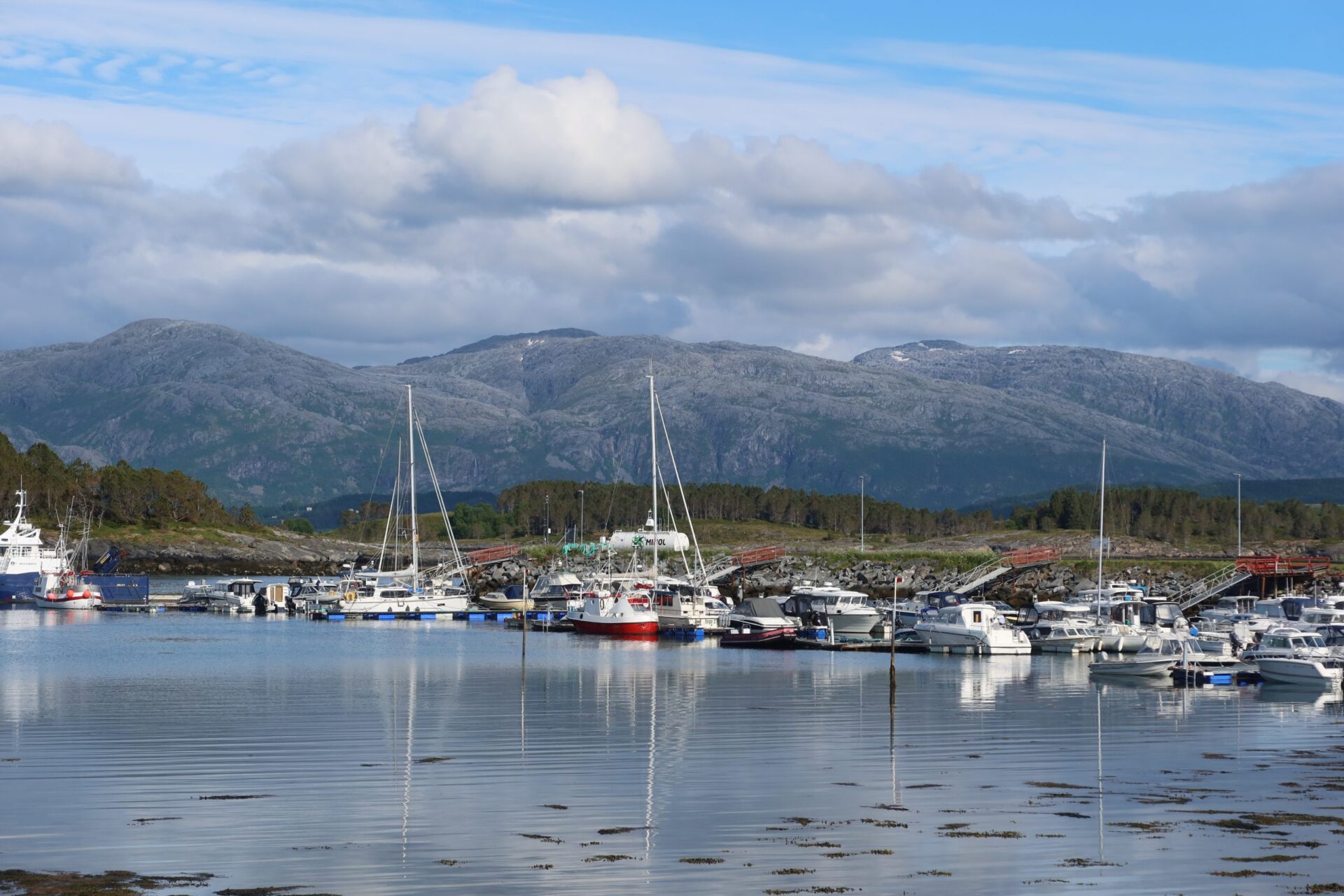

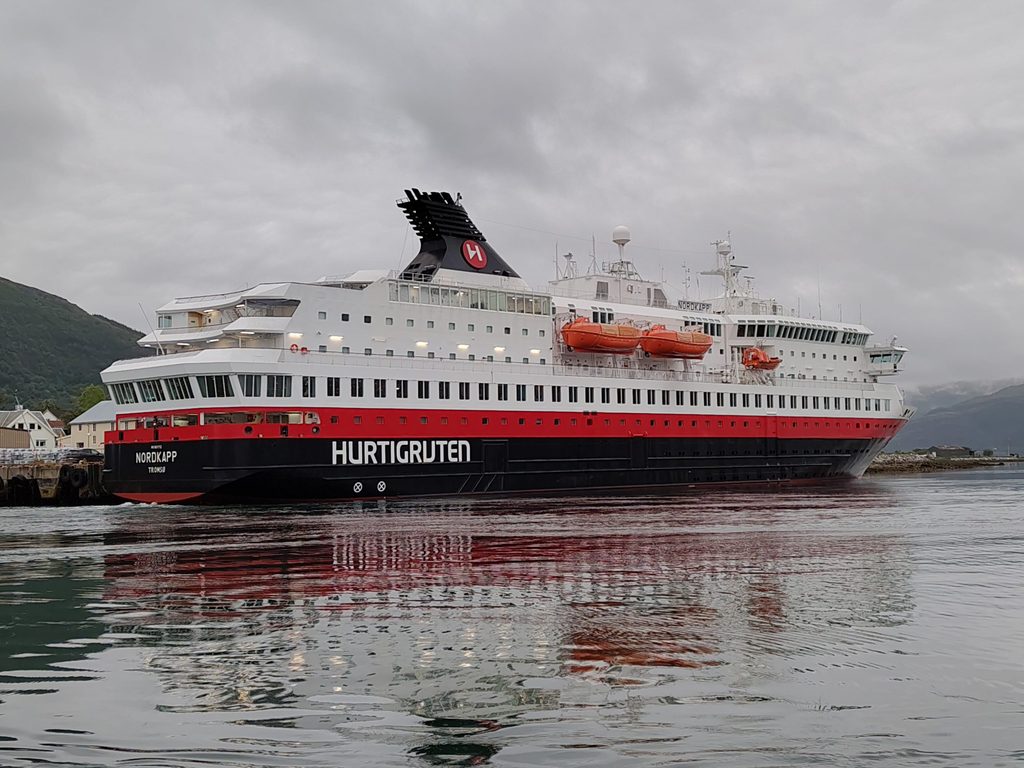
We left Nesna at 05.45am, but any hopes of sneaking out quietly on our own were quickly dispelled. I was focusing carefully on leaving backwards as, during our stop, I had noticed a hosepipe in the water just in front of us. Running over this would probably have done neither the propellor or the pipe any good and would almost certainly have been terminal for one or both. With this potential mishap averted, I started heading out, only to find that the ferry and a very large Hurtigruten cruise ship both had the same idea. Feeling generous (and recognising that they were both a lot bigger), I allowed them both to complete their manoeuvring before I headed out.
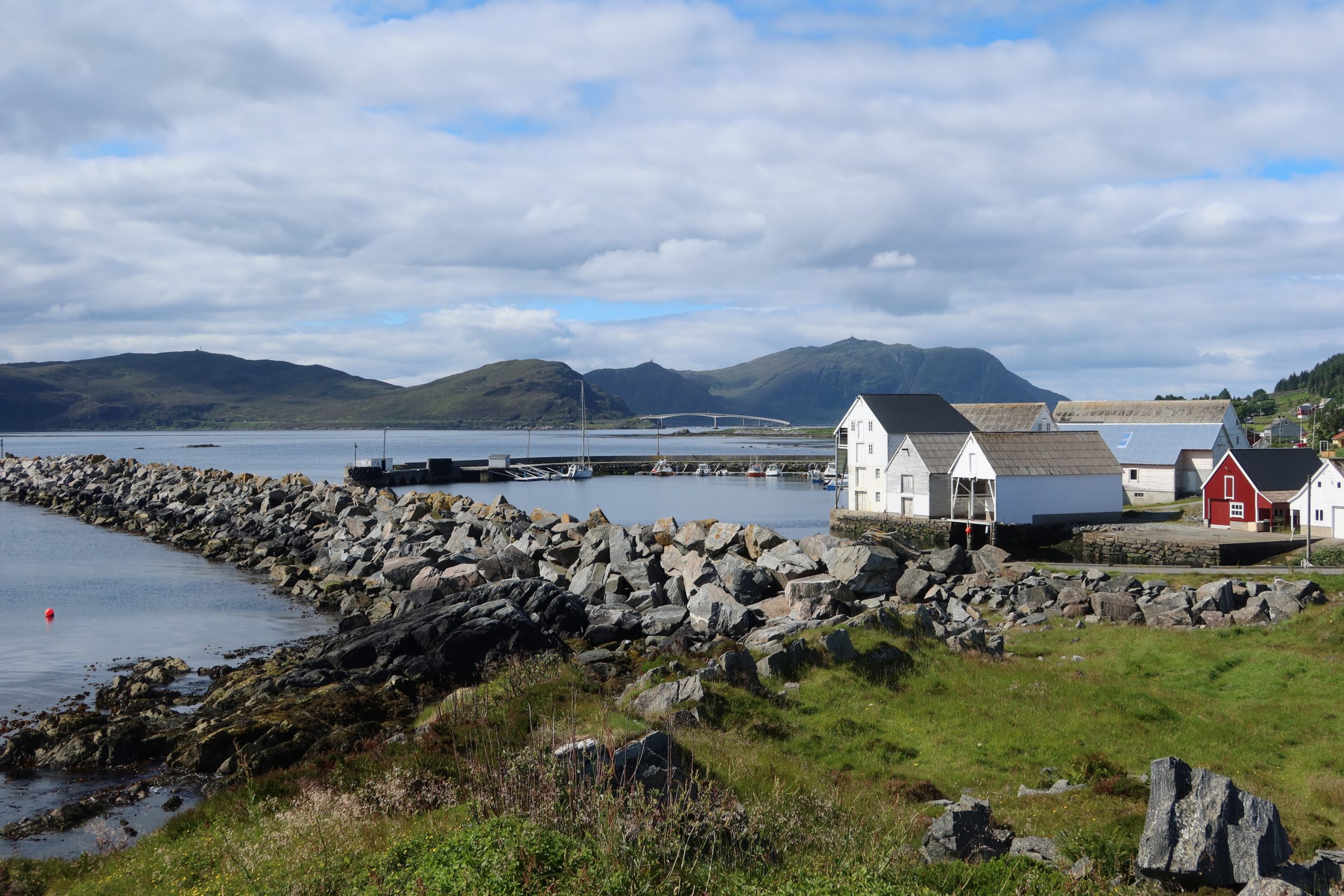
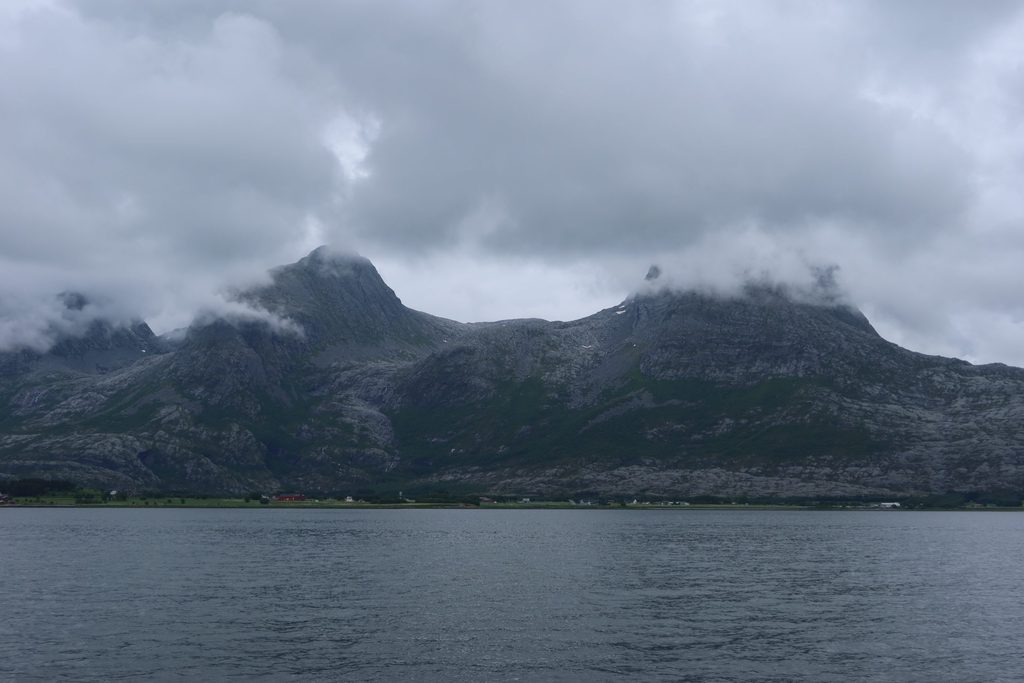
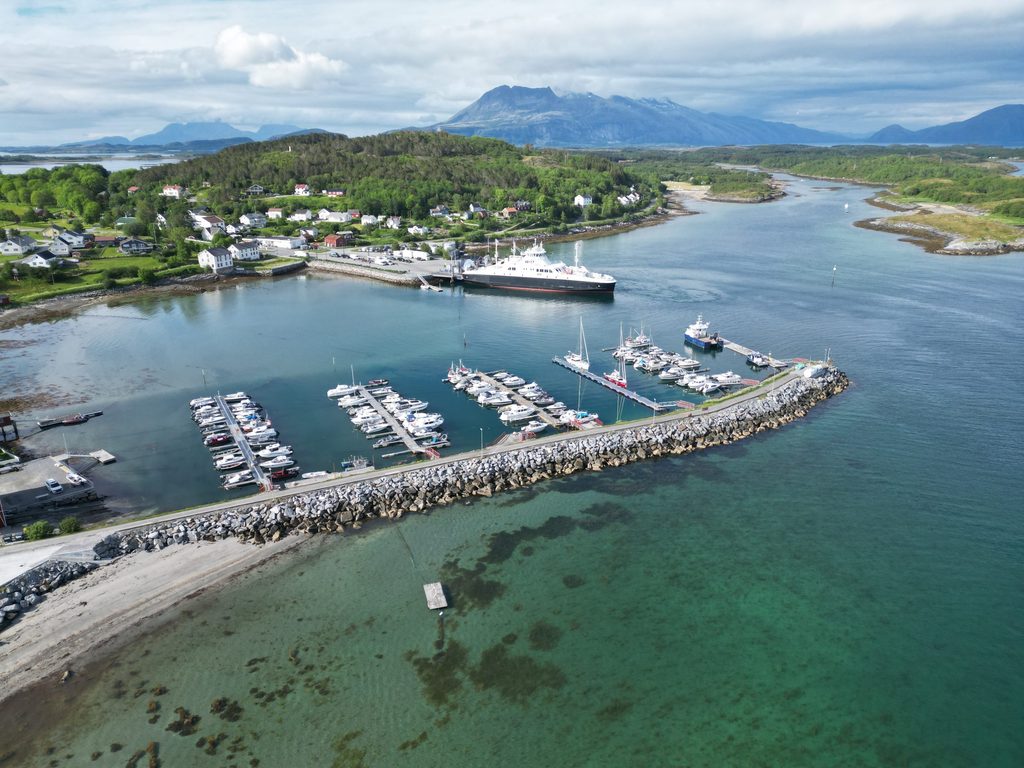
With very little wind we motored all the way. Our route took us back past the Seven Sisters (the troll sisters who were turned to stone as they waited for the prince to pay attention to them!), though today they remained firmly shrouded in cloud, so you wouldn’t have been able to count them all anyway. Shortly after the Seven Sisters we headed down past the island of Tjøtta, round the southern shore and into the harbour on the southern side. While a boat club harbour, like many Norwegian harbours, they had allocated one of the jetties as a guest jetty, so we moored up there.
In the afternoon we went for a walk up to the church. On the way we saw an information sign about Hårek of Tjøtta. He is thought to have lived from 965 – 1036, though this would seem to be a surprisingly long lifespan for this era. He was a local farmer and chieftain. The presence of many warring factions meant that he was dragged into various conflicts and so he took part in the Battle of Stiklestad in 1030. As a farmer and chieftain he had put together an army and they defeated Olaf Haraldsson. Haraldsson was King of Norway from 1015 to 1028 and was also known as Saint Olaf, Olaf the Holy, Olaf II, and considerably less flatteringly as Olaf the Stout or “Large”. This defeat by Hårek didn’t go down well with the royals and six years later when visiting King Magnus Olavsson I (the son of Olaf Haraldsson) in Trondheim in 1036, he was killed by an axe wielded by a rival chieftain Åsmund Grankjellsson. The former king’s son thereby got his revenge. No doubt Åsmund Grankjellsson was richly rewarded.
Outside the church itself was a large memorial stone to the father of Hårek – Oyvind Finsson Skaldespillar (912- 995). In more modern parlance he is known as Eyvindr Finnsson. The term skáldaspillir (“Skald-player”) is an epithet indicating his role as a poet. In fact he reached the giddy heights of being the court poet of King Hákon the Good – perhaps called that because of his attempts to introduce Christianity into Norway. One of his most celebrated lausarvísur (a stanza) is apparently:
It is snowing on the spouse of Svǫlnir
Eyvindr Finnsson
in the middle of summer;
we have tied up the bark-stripping hind of the bud
inside just like the Saami.
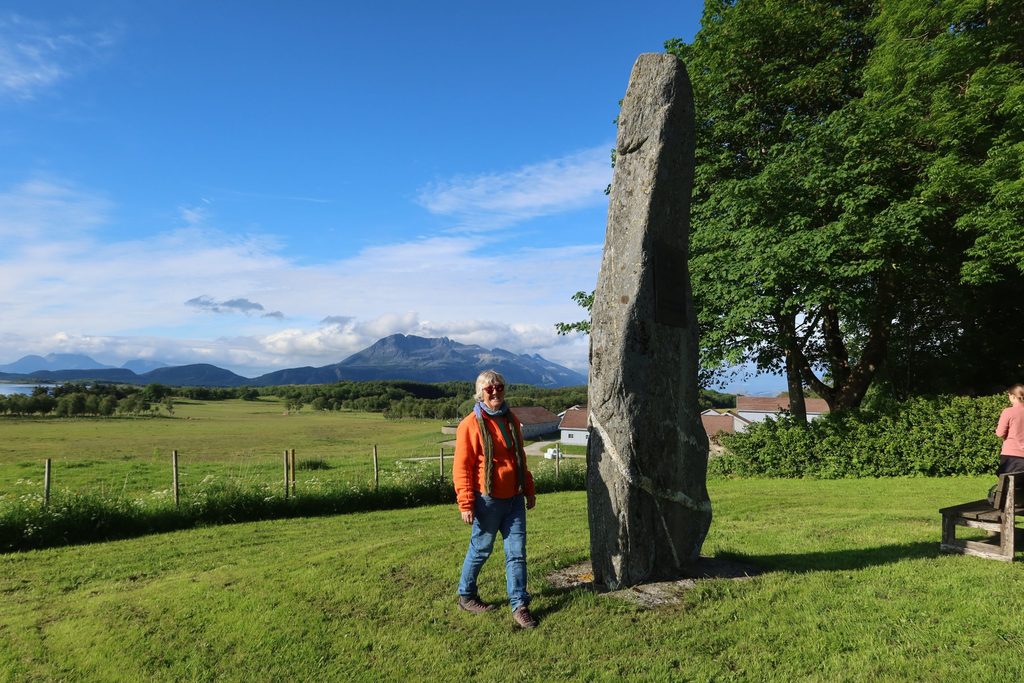
It may well be that its sophistication and resonance has changed over time! Still, clearly he is quite renowned as a poet given the prominence of his memorial stone.
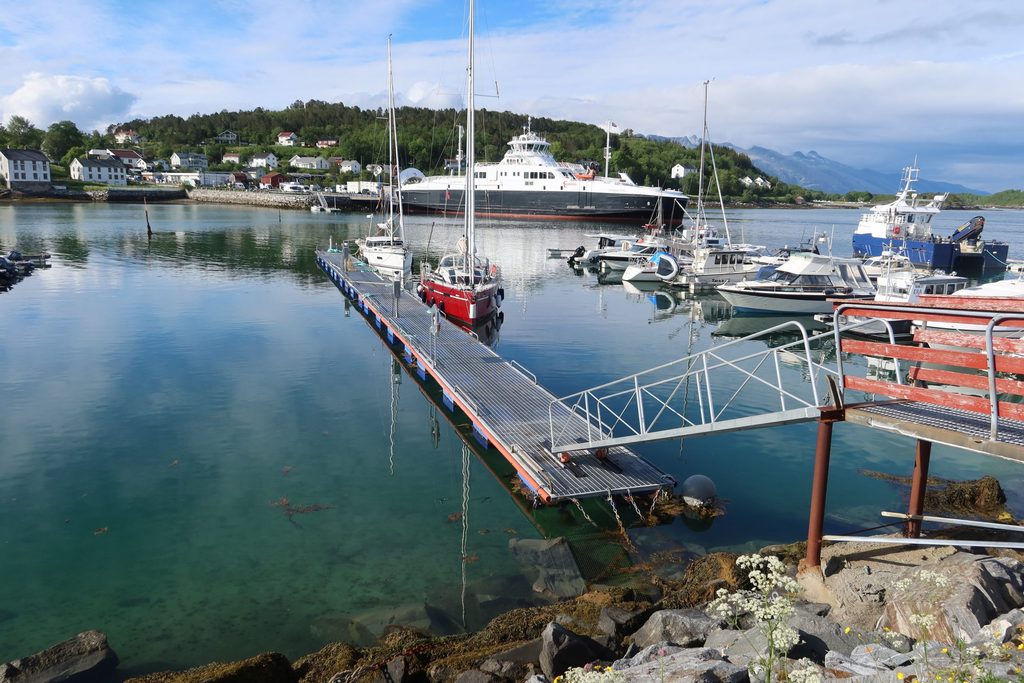
Tjøtta itself is a busy island, something clearly indicated by the number of ferries coming and going. It is relatively flat and this makes it important in the region agriculturally. This may well also be why it is so important historically and it has one of the largest and oldest Iron Age farms in Northern Norway. Apparently there are hardly any other places in this region of Norway which have as many preserved historical relics in such a small area.
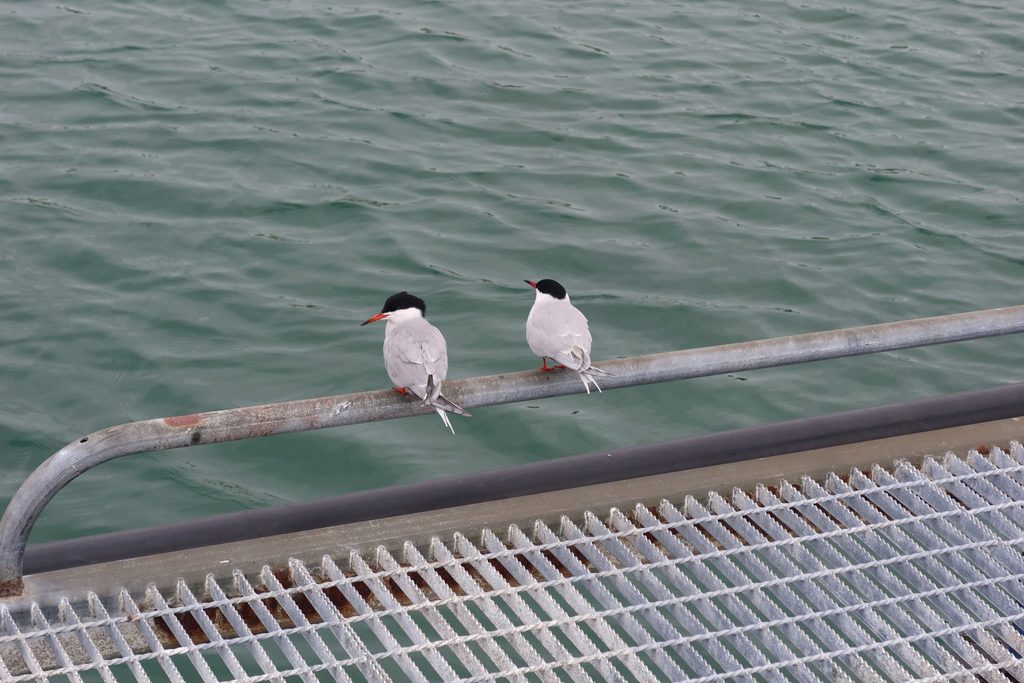
We were joined on the guest pontoon by some other guests and we spent some time identifying them. We knew they were terns, but were they the Arctic or Common variety? We reckoned they were Common terns. They were very active – possibly looking for a nesting site on the pontoon, though we weren’t sure whether they knew that with the peak sailing season about to start, it might not be the best place to nest!