
The Norwegian weather website which we have been using is yr.no. This somehow feels appropriate as in Norwegian ‘yr‘ means drizzle or light rain, so even the naming of the main weather site is trying to tell us something about the climate in Norway. This seems something of a positive feedback loop: name the weather forecasting site after the main feature of the weather so that you are slightly less disappointed when you look at the forecast. In fact Norwegians have around 8-12 highly descriptive words for rain. Particularly onomatopoeic are pøsregn – pouring rain and sludd – a mix of rain and snow (sleet). Others include duskregn which translates as an extremely fine, almost dew-like, drizzle.
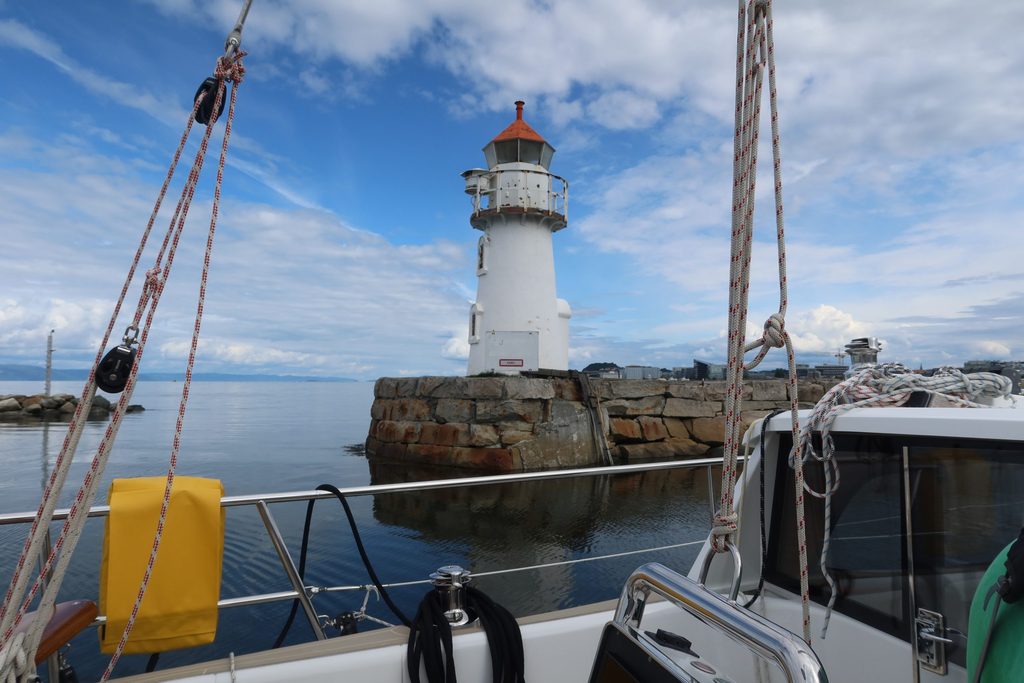
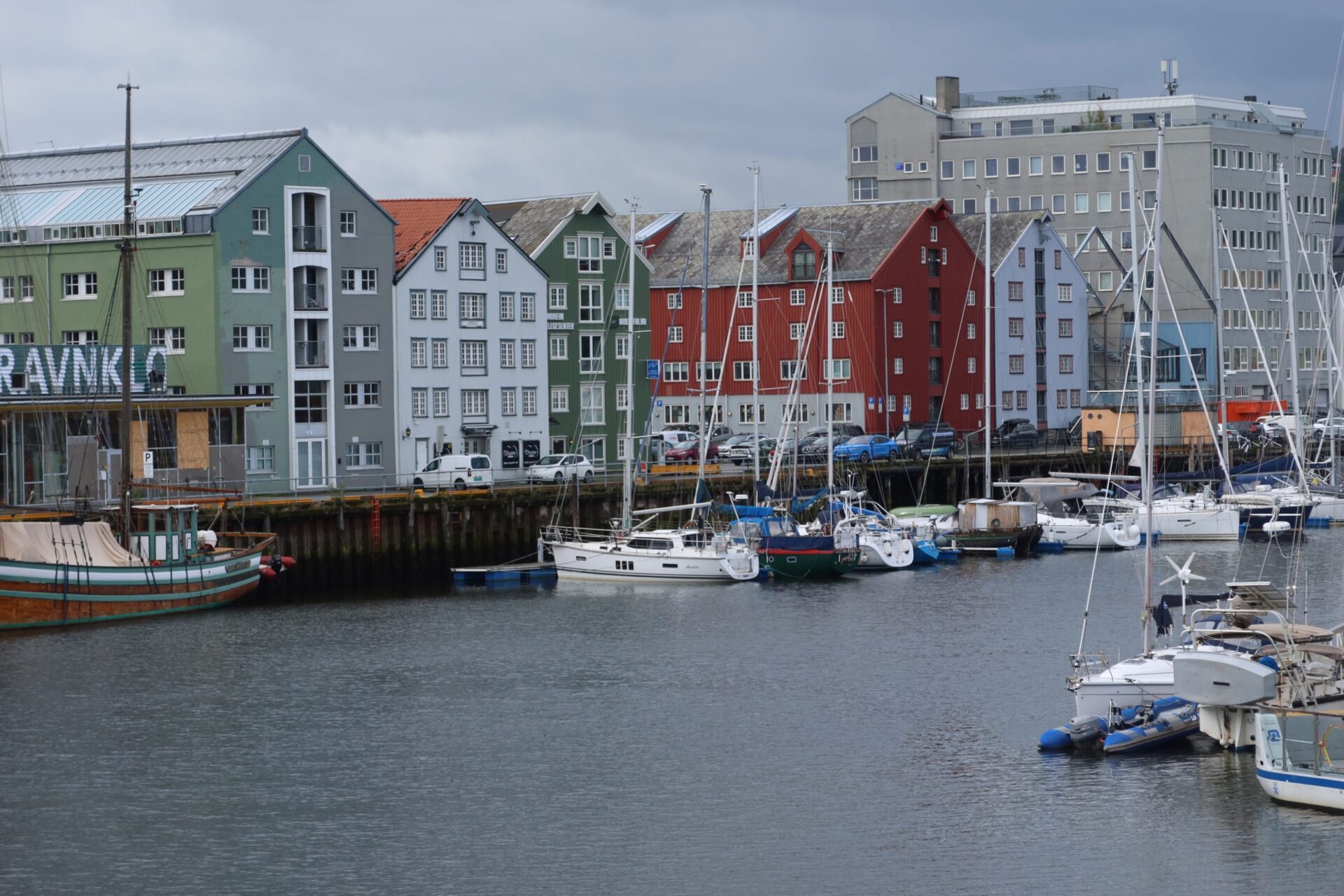
Today we had the full gamut from duskregn to pøsregn with a few sunny spells in between. For most of the trip we had little or no wind, until we decided to moor up, at which point the wind blew right up. We had planned to moor in the centre of Trondheim near to the fast ferry terminal and station, but the jetties were all occupied, so we headed round to the next-door marina called Skansen. There the jetties were busy as well, but we moored against the middle with the wind blowing us right onto the jetty. This was not comfortable, not least as it was blowing straight through the harbour entrance, but luckily the wind eased during the afternoon.
The next day we started the process of packing up the boat. With a dry forecast we forged ahead removing and folding all the sails, pulling through halyards and replacing them with ‘mousing lines’ (to avoid UV damage for the winter) and generally taking off anything which moved, or could move and even stuff which can’t move, but might get worn – a process which leaves the boat looking very bare.
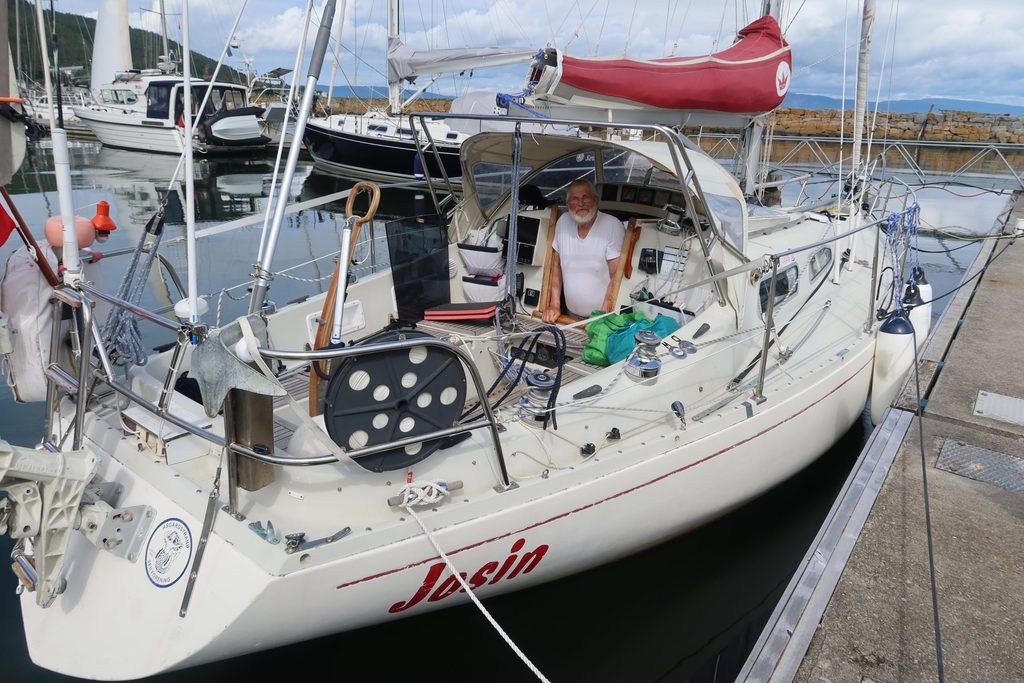
In the midst of this we started chatting with the owner of the boat next-door. He was a remarkable 91 year old. He was English but emigrated to Norway in 1968 and was still sailing actively. Most serendipitous of all – his boat was an Albin Ballad: the same class of boat as we have just bought in the UK (can you ever have too many boats?). He quickly invited us on board to show us all the adaptations he had made and talk us through all the issues he had found while rebuilding the boat – an incredibly useful half hour and with his contact details, we now have someone we can ask questions of when we face any issues ….
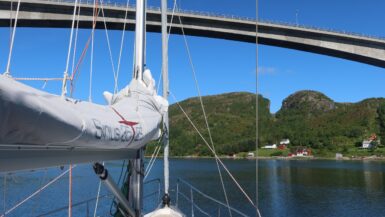
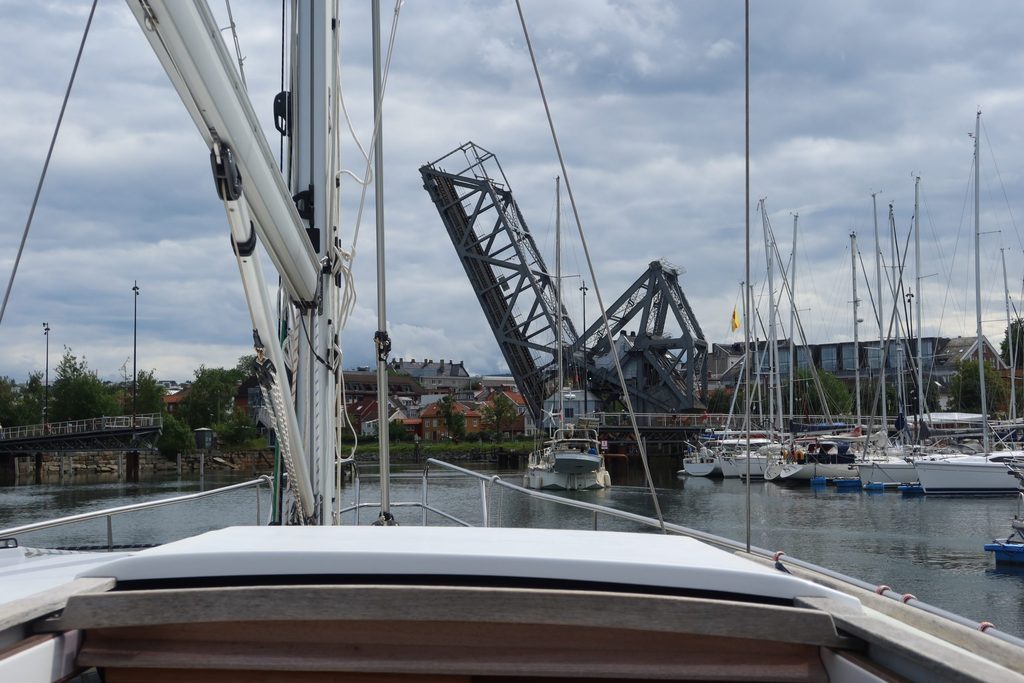
The sorting out took much of the morning and once we had done that I rang through to Skansen bridge. To get through to where we are wintering we need to go through a pedestrian bridge and also a railway bridge. When I rang the previous day and asked whether the bridge was opening at the advertised time (11.20), I got the answer “No, we have a problem with the bridge, but we do plan a test opening at 13.20 if you ring us an hour before ….“. This didn’t sound hopeful, but the next phone call elicited a positive response, so we went for it. Sure enough it opened and we gingerly followed a French yacht through into the inner harbour in Trondheim. The French yacht turned out to belong to Hugo – the sailmaker at Riggmaster who had fixed our stack-pack at the start of the season. We rafted up next to a boat which they were re-rigging and checked-in with Riggmaster. There then followed a game of boat ‘tetris’ as boats were re-arranged and moved around until eventually we could raft up one out from Hugo. This is temporary – we will finally move into a berth over the other side of the canal.
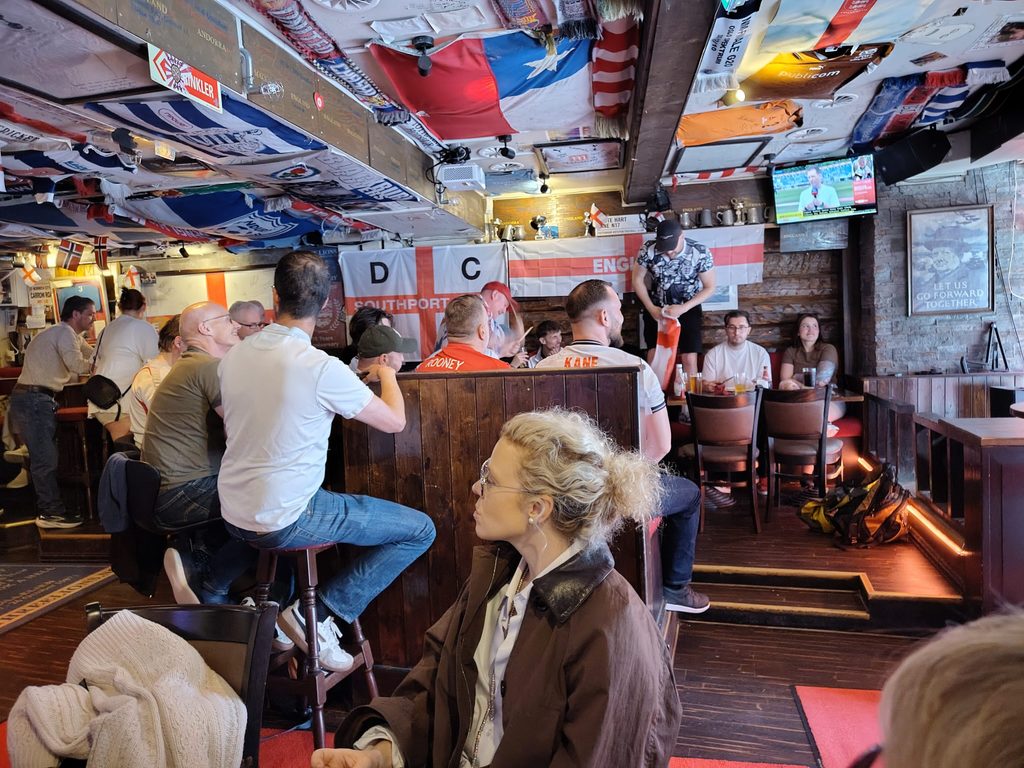
The next few days were just a whirl of travelling to Hitra to pick up the car (and Aloucia’s toilet – don’t ask ….!), cleaning and preparing the boat for the winter, washing and general dogsbodying (is that even a verb?). Most important of all though, we had to go and watch the England football match. While away in another country it is always good to immerse yourself in their culture, so finding ourselves in an English pub called The Three Lions, surrounded by England fans bedecked in England flags and one even with a drum was a different kind of culture shock. The pub had several large screens so we had a great view and it is safe to say that there was plenty of atmosphere (for which read noise!), but it was great fun …. A good result as well – 2-1 against the DRC.
Finally, on Saturday afternoon we felt ready to move over to the other side. We cast off and headed over to be greeted by Roald (who we first met in Kuringvågen and then Hasslevika) who keeps his boat just two boats down from us. The next hour was occupied with me fidgeting – adding fenders, adding mooring warps, adjusting mooring warps and generally fiddling until I was happy with the way the boat was trussed up. Final jobs – drain all the water tanks, turn off the seacocks, turn off the gas and ….. walk away …. Not easy after two and a half months of living aboard.
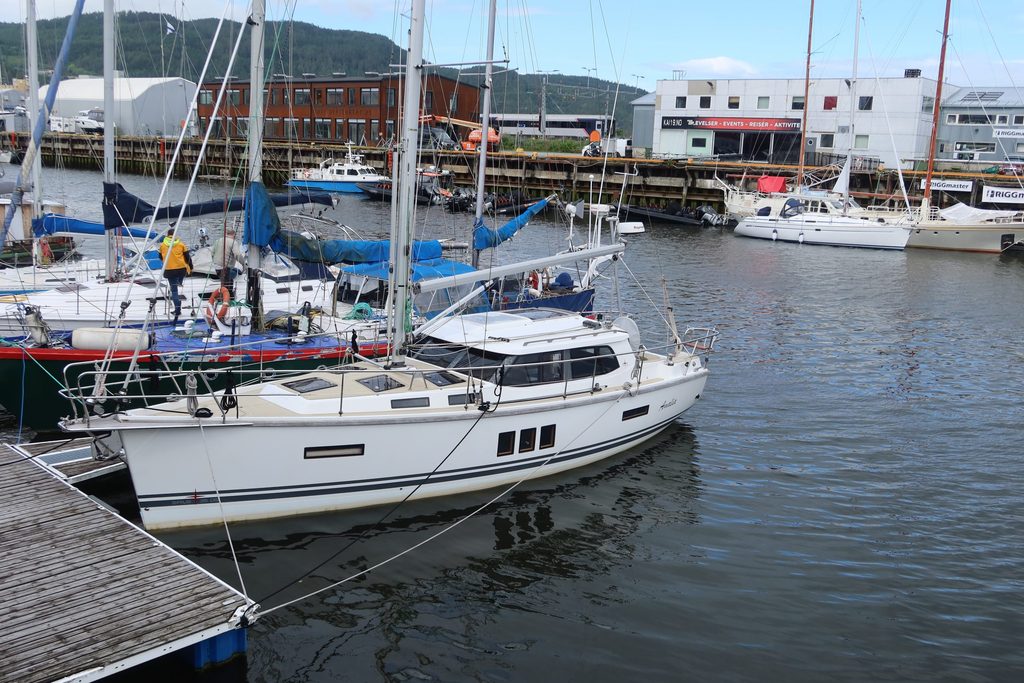
The boat is moored in berth number 42. This seems entirely appropriate if you are a fan of Douglas Adams. If you aren’t, then let me explain …. The computer Deep Thought (the most powerful computer ever) was asked to provide the “Answer to the Ultimate Question of Life, the Universe, and Everything“. After 7.5 million years, Deep Thought revealed the answer to the ultimate question to be “42”. The people hearing this were somewhat bemused and so asked what question it was the answer to. Deep Thought thought and thought and announced that to work out the ultimate question would require an even more powerful computer and would take 10 million years. This more powerful computer was the earth and was built by a company of ‘planet builders’ called Magrathea. The one person who we meet from Magrathea in the book is called Slartibartfast and he was the one who built Norway – he was particularly proud of all the crinkly bits he created. We have definitely noticed those as we have been sailing around! So, somehow, a very appropriate place to end up …..