Another day, another passage north. We started the day with a good breeze and then the wind died. Then it came back to life and we even had to put a reef in. Then it died again, then it didn’t. And so it went on …. Despite all this, it was a very nice sail, but we did have to motor the last hour when the wind finally made its mind up to have an extended coffee break. The passage was just over 25 miles and took around four and a half hours, so quite a quick run.
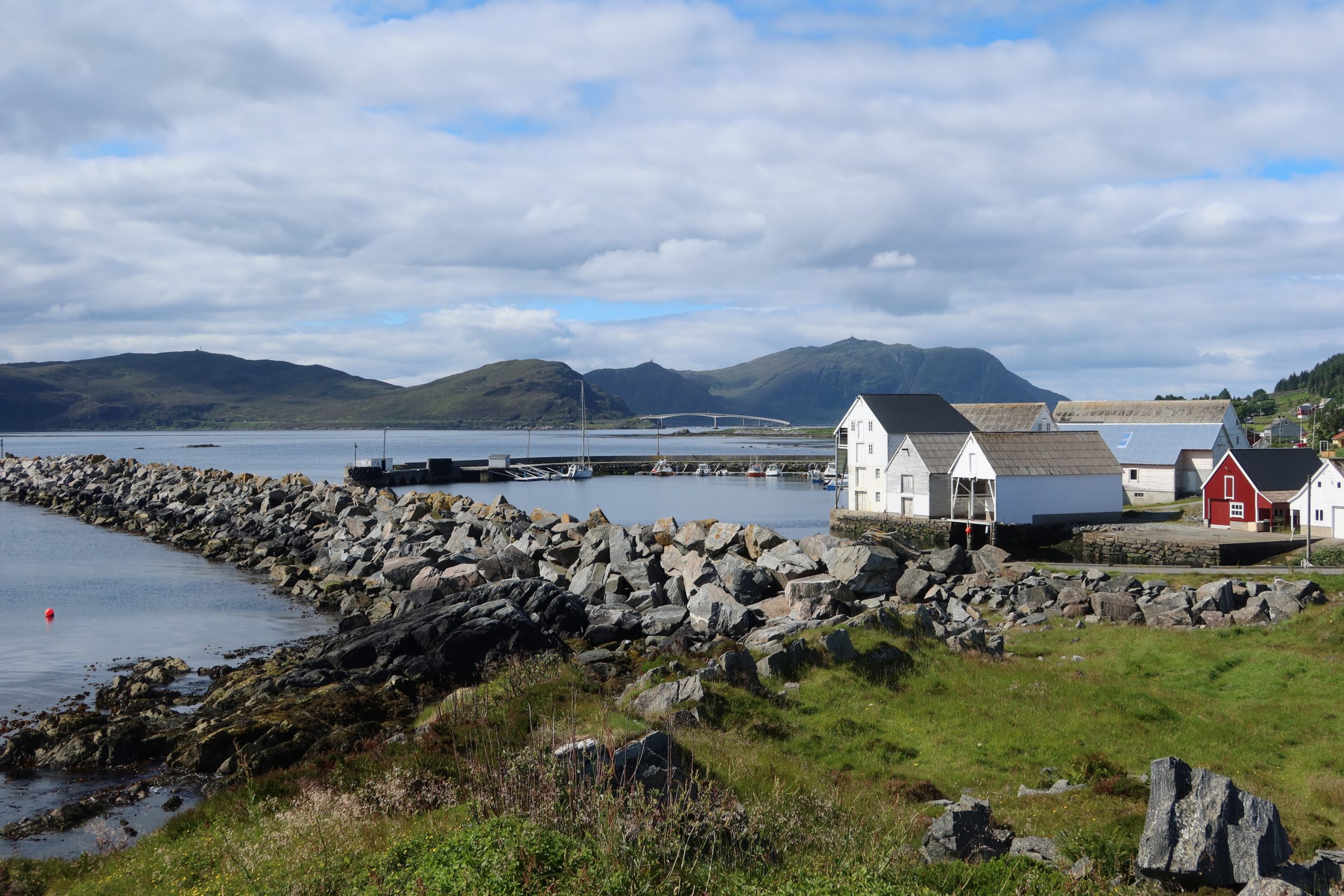
Once at Onøya we headed in carefully. It looked from the pilot book like there was just one option for us and that was the pontoon just inside the breakwaters. The rest of the harbour looked too shallow, so we swung round quite quickly and got tied up. In fact there was well over three metres under the keel, so plenty of water, but best not to take any chances.

Part of the reason for heading for Onøya was to visit the island of Lovund – about ten miles to the west. However, some of the pilotage guidance was a little contradictory, so we weren’t sure whether there was enough water for us. Onøya is a ferry port, so we planned to take the ferry out to Lovund to have a look round. The next day though looked pretty rainy and murky, so rather than head to Lovund we took a walk up the hill behind the harbour – Høgfjellet. Actually we hadn’t intended to walk to the top, but the app I was using didn’t have any topographical information and by the time we realised how far up it was, we were committed. It was despite all the ups and downs (literally) a fantastic walk. Some sections took us through low scrub type forest and then through a peaty section with open views and lakes. A really varied, but soggy, walk.

The next day the forecast was much better, so we booked tickets on the high-speed ferry to Lovund. Ruby Tuesday had headed out there to reconnoitre the apparently new guest harbour, so we took the ferry and joined up with them.

The high-speed ferry was excellent – smooth, fast and very comfortable. The ferry we took was named Fredrikke Tønder-Olsen. This is named after a Norwegian entrepreneur of the same name. She actually started as the skipper of a fishing boat and was apparently very skilled, but poor sight led to her changing profession and in 1894 she started up a transport agency, providing foodstuff all around Helgeland. Through the business she improved the lot of female workers and only employed women for the administrative positions. The company – Kristiania Visergutkontor – still exists and is the country’s first and oldest goods transport agency.
Once we had arrived and had lunch on Ruby Tuesday, we walked over to have a look at what we had come for – puffins. Lovund is apparently the home to Helgeland’s largest colony of puffins – about 200-300,000 birds. There is even a specific name for the day they arrive – Lundkommardagen (Puffin Day – April 14th). They are apparently very consistent from year to year and lots of people travel to the island on the 14th to see them arrive.
The walk to the puffin viewing area and the view from it was fantastic – at least the view of the island and archipelago was. The view of the puffins was …. well …. underwhelming. It was clear that they were puffins flying around – the frantic beating of wings made that obvious – but they are really quite secretive and as soon as they had landed, they headed straight behind the rocks into their burrows. Even with binoculars, it was tricky to see them clearly and the occasional flash of orange was the only thing that gave them away. However, none of that diminished the thrill of seeing them in their natural habitat and in a stunning location – a natural scree slope running down from the peak of the island – Lovunden.

The route back to Onøya was slightly slower. It turned out that one of the captains of the high speed ferries was ill, so the one we had planned to come back on had been cancelled. Instead we took the slow car ferry, though this was very comfortable as well and the trip passed quickly as we chatted to a Norwegian and American for the trip back. They had apparently been exchange students back in the 1980s and had kept in touch ever since.

An excellent few days on Onøya which turned out to be a good base for what we wanted to do ….