At last, we’re off. We headed off about 7.45am and motored slowly out through the channel at Hitra, not least because it is narrow in a couple of places, but mainly because it was low water! However, the minimum we saw on the depth sounder was about 2.3m, so plenty of clearance. The weather was sunny, but still cold and we motored the first part for about an hour and then a bit of breeze filled in, so we hoisted full main and genoa and switched the engine off.

We had a nice sail for an hour or so, but gradually the weather got squallier and the wind gusted between 17 and 26 knots in the squalls. After a while we took the genoa in as the gusts got greater, but after a minor broach with a gust of 28 knots, we decided to drop the main and carried on under staysail only. This worked out better anyway as the wind was dead behind.
This was then the pattern for much of the morning with the engine on occasionally (and once to use the inverter to boil the electric kettle) and then off again as the wind increased or a squally came through. Depending on the wind we were making between 4 and 6 knots over the ground, but it was comfortable, so we stuck with it, finally taking the staysail in around half an hour before arriving as we weaved through under the bridge to Stokkøya and then round into Kuringvågen marina where Ruby Tuesday were waiting to take our lines. A total passage of around 45 miles in just under 9 hours.

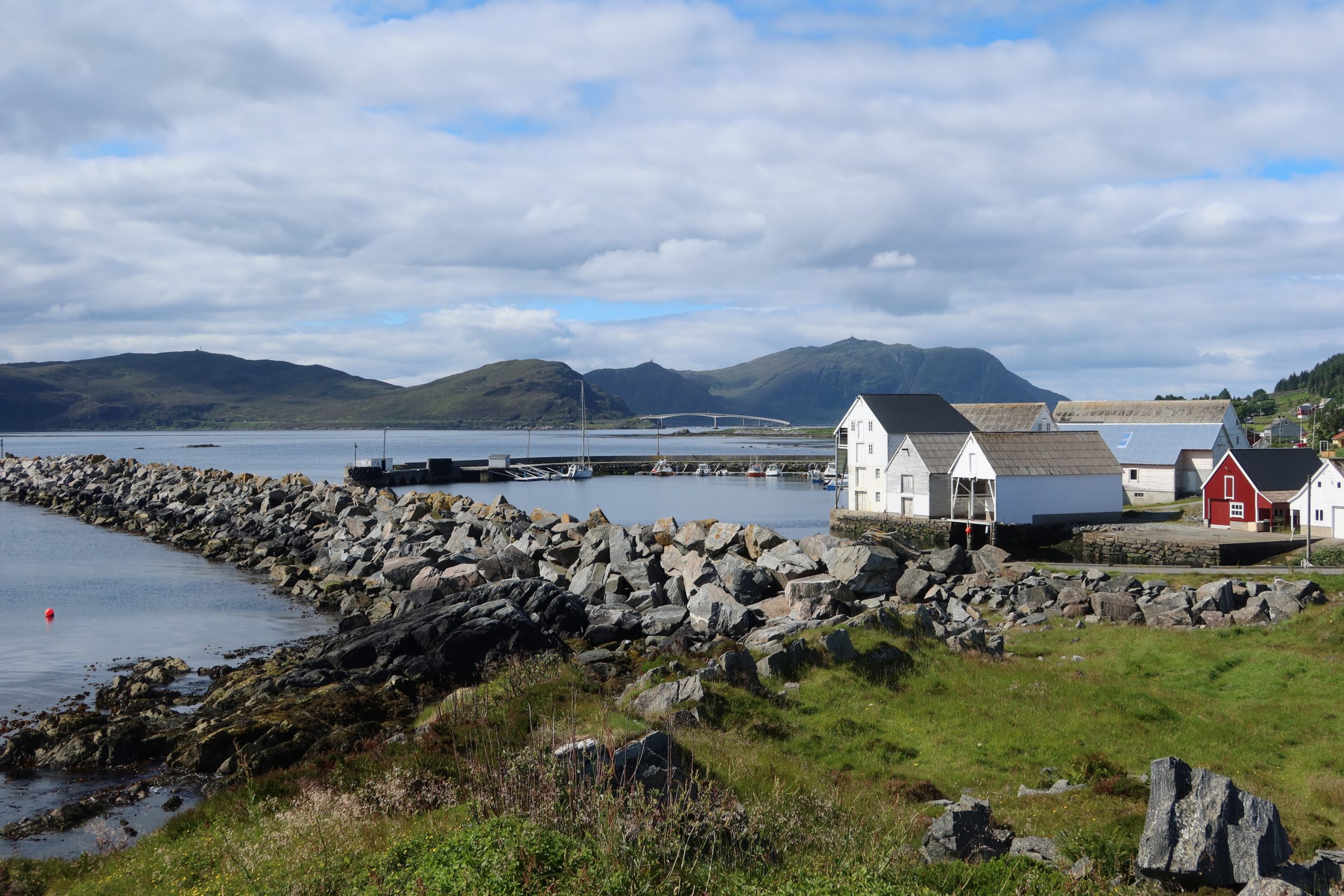
We had a lovely evening with the sun coming out and went for a short walk round to the boat sheds. On one of the sheds was a couple of strings of stockfish drying. Stockfish are cod which are beheaded and gutted and then spread out (usually on racks called hjell) to dry. They prefer to dry them in temperatures close to freezing with plenty of wind (which there has been no shortage of!) as this helps them dry and the freezing temperatures prevent rotting and flies. The process is usually, for these reasons, carried out between February and May, taking 3-4 months in total. Once dried they will then be taken inside to a dry but well-ventilated space for another couple of months to ‘mature’. The final product is hard and dense as the fish have lost about 70-80% of their original moisture. If it is has been done properly, then the end product will last over three years, but it will retain all the original nutrients from the fresh fish with high levels of protein, vitamins, iron, and calcium. The drying though does mean that you can’t just take some out of the cupboard for a meal – because it is nearly 100% dry, it requires days of soaking in water to become tender enough for cooking.

The traditional Norwegian dish with stockfish is called Bacalao and is heavily spiced with chillies, tomatoes, garlic, potatoes and olives. This came about as the stockfish was traded with Mediterranean countries in the 17th century and spices became more widespread. It tends now to be served at celebrations and is particularly popular in the northwest of Norway.