May 17th is a big day. In Norwegian terms anyway. May 17th is Norwegian National Day – sometimes imaginatively referred to as Syttende mai (’17th of May’ – a bit literal?), Nasjonaldagen (‘National Day’ – a bit xenophobic?), or Grunnlovsdagen (‘Constitution Day’ – more symbolic?). However it is termed, the day involves parades, dressing up and eating really crappy food – waffles, ice cream and hot dogs are apparently favourites.
In strict historical terms the day celebrates Norwegian independence and marks the day when the Constitution of Norway was signed at Eidsvoll on 17 May 1814. This makes it the third oldest written constitution still in use and created Norway as an independent kingdom. This was to ensure that they were not ceded to Sweden after Denmark–Norway’s devastating defeat in the Napoleonic Wars and created a Union between Sweden and Norway. The relevance of eating hot dogs and ice cream as part of this seems to have been lost in history …..
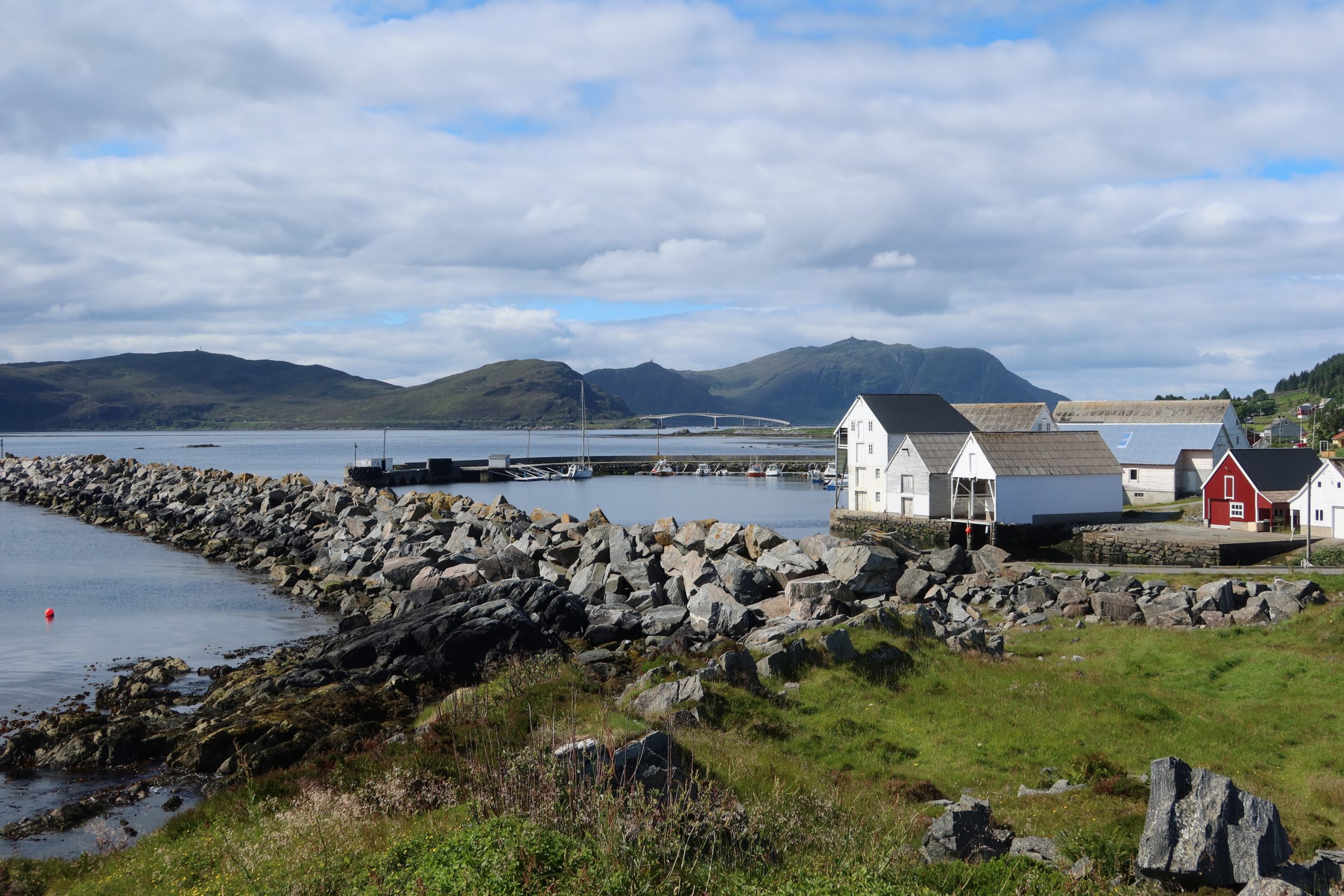
So, to try and get a feel for what this was like in a Norwegian town, we headed off to try and find a Norwegian town. Realising that there were none nearby, we headed instead for the nearest settlement – Halsa – perhaps more appropriately described as a village, with a population of just 300-400 people. We had spent the night at the Svartisen glacier along with a French boat and it turned out that they had the same idea at the same time, so we followed them round. The entrance to the harbour at Halsa was marked as very shallow on the charts, but various pilotage sources assured us that it was dredged to 5 metres, so, just in case, it seemed a good plan to follow a larger French boat in. The one flaw in this plan turned out to be that, on chatting to him on arrival, he only had a draft of 1 metre with a lifting keel. We were twice as deep, so it would have been us that hit. Luckily, we didn’t …..

Then we had to find the village centre. It wasn’t obvious, but we wandered a mile or so up the hill towards the church, figuring that would be the best bet. We then saw people getting out of cars with tubas, so we knew something was going on. A few hundred metres further and we realised that the local school was the centre of everything and people were slowly gathering. Some were dressed up smartly and some in their traditional Norwegian dress – the Bunad. This term, in the strictest sense, refers to clothes designed in the early 20th Century based on traditional costumes. The Bunad movement is a growing one and Bunads are now becoming acceptable as a formal form of dress for all sorts of occasions, not just May 17th. They were even worn by many at the Blessing of the Reign of King Harald and Queen Sonja in 1991, so the movement seems to be gaining momentum. However, a Bunad is not a cheap option and can be thousands of pounds, meaning that many will be hand-embroidered. The designs of Bunads are typically elaborate, with embroidery, scarves, shawls and hand-made silver or gold jewellery usually known as sølje. While it is more common to see women wearing Bunads, it is said that men’s Bunads are outselling the women’s ones for the first time.

Once we got to the school, we bought an ice cream (just to fit in!) and sat with the crew of the French boat who came in at the same time. As always happens when British and Europeans are chatting, politics came up. The ‘B-word’ was quickly dismissed for more pressing political changes and our exhortations about the quality of our politicians quickly brought a solution from our French counterparts. They did say that it hadn’t been used for a while and may need a service and the blade sharpening, but they were happy to lend it to us in our hour of need …..

Politics resolved, we then enjoyed the celebration. The parade set off down the hill back towards the harbour. Led by the local brass band, they were followed by various people holding banners and then locals – some in traditional Bunads. Following up at the back were two young lads in suits on electric scooters, the local vicar and then the French and the English, all of which felt like a suitable metaphor for the relative state of our economies …. We fell into conversation with the vicar who gave us an enthusiastic commentary about the difference between the Lutheran and Free Churches in Halsa and the surrounding parishes.

Once the parade arrived down at the harbour, they turned round by the Spar (apparently the sponsors of the event!) and headed back up the hill while we kept straight on and back to the boat. A very interesting day and lovely to see the way it was celebrated at a small local, regional event.